


ICM HPQC News Flash - February 2026

ICM HPQC Fund (ICM HPQC) continues to see accelerating momentum across next-generation computing and AI infrastructure. In this newsflash, we cover:
The accelerating global build-out of AI and data centre infrastructure, alongside rising power and cooling demands
Key market trends shaping hyperscaler investment, semiconductor innovation and capital allocation
The growing importance of enabling hardware and infrastructure as AI deployment scales
Continued progress in quantum computing and broader advanced compute technologies
How these developments will position ICM HPQC heading into 2026
Portfolio updates across Mixx Technologies, Diraq, Q-CTRL and Salience Labs
A curated roundup of notable industry developments across the sector
“Written by humans, please don’t blame the robots for our typos”
When there’s a gold rush, invest in shovels
As the AI boom gently gets supplanted by the Data Centre Space Race over the next two quarters (you heard it here first, folks), it pays to remember what is driving the surging ripples of hyperbole in the compute sector and to sense check one’s own investment strategy.

Despite our deep predilection for deep tech in the compute space, the HPQC team are, at heart, old school conservative infrastructure investors. The infrastructure we track just happens to be the solid artifacts required to get that high-performance AI gold out of the ground. We also hunt out the best tools for training, inference, edge computing and quantum. (It’s important to know the difference between a pick, shovel and excavator when selling to prospectors.) Why do so many titans of the tech industry skip over the tools discussion and fill up so many streams of newsfeed with claims that there’s something massive coming, and it’s just around the corner? Why do the likes of Musk, Bezos, Thiel and even Jensen keep pushing the ‘world is about to change forever’ narrative? Why must they, and by extension us as their adoring investors, always be about to strike it rich and unearth the biggest nugget of all? Beyond all the hype, of course, it’s still all about PE ratios. Right?
The ICM HPQC Fund (HPQC) specialises in early-stage venture investments, like many VC we tend to see the public markets as infused all too often with fool’s gold. We do tend to use public markets to make points about valuation and sentiment for our later-stage private tech companies, and that’s it. There are exceptions though, and this one is a cracker - check out the analysis of Tesla’s self-driving cars business versus Waymo’s matching business by Rory O’Driscoll of Scale Venture Partners (See it here – takes less than a minute). Tesla trades at a PE ratio in the 360-395 range meanwhile Ford, a mature car company with few pretensions to be much else, has a PE ratio between 10 and 12 (our rough calcs, just making a point). This clearly demarcates Tesla as a growth stock and Ford as a stable mature stock (Or so my Finance 101 Prof would tell me).
In his video Rory notes that Tesla trades at a market cap of about $1.2 Trillion USD, give or take, on a $100M flat revenue line, with declining profitability. Tesla’s car business alone presents as a mature company; there are no hockey stick growth curves in the future of Tesla cars – despite the obvious allure of the Cybertruck. Tesla cars are cool and well made, but then so are all those cars coming out of China at about half the price (if only they could be sold in the USA).
So why does Tesla’s revenue from selling cars drive such a glittering market cap and PE Ratio? On any normal basis one might value their revenue line at 2X, so $200 billion. That leaves $1 Trillion of market cap that must be associated with new revenue streams. These new pots of future gold must be the Tesla Self Driving Taxi fleet and the awesome Optimus robot. For ease let’s split that $1 Trillion of non-car market cap 50:50. This gives you Tesla’s self-driving taxi business valued at $500B – not bad for a company that has less than 500 taxis plying the roads in just a few states. Meanwhile Waymo sits down at a market cap of$126 B with 2500 vehicles on the road and real revenues…

By contrast, Optimus, now more than a year late from the original commercial launch date promised by Tesla, just announced that it will be restricted to warehouse and factory settings, focusing on repetitive and predictable tasks within a well-mapped, known physical environment. This is because, despite the fancy dance moves, the compute is not available to Optimus locally (in it or on it) to allow Optimus to interpret and navigate unpredictable built environments. Today, if you sold Optimus into lots of typical family homes, the internet would soon be full of videos of it stumbling over patches of Lego, overfeeding pets, accidentally pouring cleaning products on children and so on. It’s not that AI systems are not there to navigate a robot around a complex space, doing new things – it’s just they are not there in formats that allow you to do the AI required on device, or even fast enough over Wifi – especially when you have thousands of them. So, back to gold: a funky robot business, not yet ready for mass market launch, is worth at least $500B. Eureka!
Invitation: Nvidia GTC March 16th to 19th 2026 in San Jose Ca, USA.
The HPQC team will be attending NVIDIA GTC 2026, taking place from 16–19 March 2026 in San Jose, California. Several HPQC portfolio companies are also expected to participate in the event.
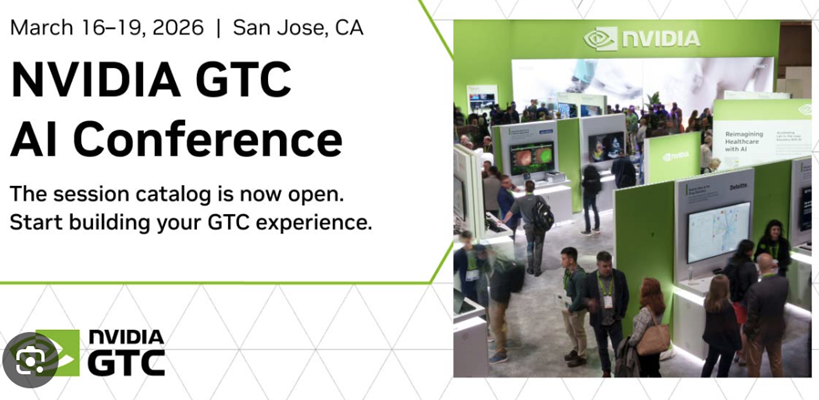
The HPQC team intends to host a small number of briefing sessions to discuss developments in advanced compute, AI infrastructure and portfolio progress. If you would like to receive further information regarding these sessions, please contact us directly.
Separately, HPQC intends to host an online post-GTC briefing and Q&A session the following week to share general observations from the conference. A separate invitation will be circulated in due course.
Portfolio News

NRFC backs Diraq to lead global race to utility-scale quantum computing
Diraq has secured a strategic $20 million equity investment from the National Reconstruction Fund Corporation (NRFC), backing the company’s ambition to become the global leader in the development of utility-scale quantum computing and deliver its first product by 2029, a quantum computer capable of genuine quantum advantage.
Diraq Founder & CEO Andrew Dzurak said, "We are at a pivotal moment where years of breakthrough research is transitioning into a commercial reality that will redefine future computing. Australia has always been a quantum powerhouse in the lab and, with the NRFC’s backing, we are ensuring it becomes a quantum powerhouse in the market. I’d like to thank the NRFC for its support, which is precisely the type of mandate the Corporation was created to fulfil. By backing Diraq, the NRFC is not just investing in a company; it is helping to build a sovereign, advanced manufacturing capacity that will allow Australia to lead the next era of computing.

"This investment arrives as Australia builds its strength in critical technology infrastructure, particularly within our booming data centre sector. Diraq’s quantum computers are natively designed to integrate seamlessly with existing data centres, offering a unique, homegrown advantage. By leveraging Australian quantum expertise, local businesses - from energy providers optimising the power grid to defence and pharmaceutical innovators - can gain a decisive competitive advantage in the global market, ensuring Australia captures the full economic value of its inventions."
NRFC CEO David Gall said, “Australia has the potential to lead the world in quantum computing and Diraq’s groundbreaking combination of silicon-based qubits and tried and tested semiconductor architecture will revolutionise the industry. Diraq’s growth prospects are immense, and the company represents the exact kind of high-value, transformative manufacturing the NRFC was created to support."
Diraq is backed by global deep-tech investors, including ICM and Quantonation, and has attracted investment from Australian superannuation funds Hostplus, NGS Super and UniSuper, in addition to Australian investors John Higgins Family Office, Taronga Ventures, Main Sequence Ventures, Co:Act Capital and Uniseed.
The company recently launched operations in Melbourne, in addition to its two hubs in Sydney, and it has U.S. operations in Palo Alto, Boston and Chicago.
Main Sequence Ventures Investment Manager Alejandra Romero, said, "At Main Sequence, we look for 'unfair advantages'. Diraq has the ultimate edge: they are the only players capable of putting millions of qubits on a single chip using the world’s existing multi-trillion-dollar silicon supply chain. While other quantum approaches require exotic materials or massive footprints, Diraq scales. The team has progressed rapidly in a few short years, establishing partnerships with global technology leaders, including Dell and Nvidia, that recognise the opportunity and want to partner with Diraq to integrate the company’s quantum technology.”
Diraq’s quantum computers store information in silicon-based quantum bits, known as “qubits”. Diraq’s proprietary technology enables millions of qubits to be placed on a single chip, meaning Diraq is able to produce compact computers - minimising the intensive cooling facilities required - and deliver practical quantum computing that is both cost- and energy-efficient.
Around the Traps: Our Monthly Top Ten Recent Data Centre and Compute Technology Breakthroughs
1. Cisco's Silicon One G300: The Network Gets Clever
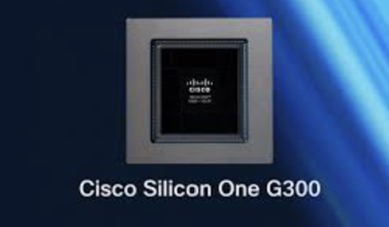
When you stuff hundreds of thousands of processors into a building - the digital equivalent of cramming sardines into a can, except the sardines cost $40,000 each and run hotter than a summer sidewalk in Phoenix - the plumbing becomes rather important. Cisco's Silicon One G300, unveiled to 21,000 slightly jetlagged IT professionals in Amsterdam on February 10th, promises to untangle this particular Gordian knot with what the firm calls "Intelligent Collective Networking." The chip delivers a 33% improvement in network utilisation, which is rather like discovering your highway can suddenly handle a third more traffic without adding lanes, and completes AI training jobs 28% faster by orchestrating data packets with impressive precision. As hyperscalers race to build GPU clusters so large they require their own zip codes, such incremental gains compound into competitive advantages – but Cisco still needs faster systems and is hunting startups to acquire…
2. Navitas (Nasdaq: NVTS) Unveils 98.5% Efficient Power Platform for 800V Data Centres
At the HPQC Fund we have always had a soft spot for gallium nitride (GaN) – why? Because in theory if you build semiconductors with GaN, you can have more efficient systems than with just plain ol’ silicon. You waste a lot of energy pushing electrons through copper on silicon. Navitas Semiconductor's new 10-kilowatt power platform, announced February 9th, has managed to reduce this wastage to a mere 1.5% - achieving 98.5% efficiency while switching at one megahertz, which in the world of power electronics is akin to tap-dancing at the speed of thought. By employing gallium nitride transistors in a three-level architecture the California firm has created what amounts to a more elegant power supply for ‘tomorrow's AI facilities’. Given that a single AI query now consumes 100 to 1,000 times more electricity than a standard search engine query, even marginal efficiency improvements translate into megawatts saved and the kind of money that makes accountants weep with joy.
3. Meta Secures 6.6 Gigawatts of Nuclear Power

In the most ambitious nuclear procurement agreement yet, Meta announced in early February that it will secure up to 6.6 gigawatts of power from three nuclear providers. The arrangement with TerraPower, Oklo, and Vistra provides immediate access to existing reactors in Ohio and Pennsylvania while supporting construction of new small modular reactors expected online by 2032, assuming nuclear construction proceeds on schedule, which historically has happened about as often as a total solar eclipse coinciding with a leap year on Friday the 13th. This signals that hyperscalers are no longer content to purchase renewable certificates - those peculiar financial instruments that allow you to claim greenness by paying someone else to be green - but are instead becoming infrastructure developers in their own right.
Source: https://about.fb.com/news/2026/01/meta-nuclear-energy-projects-power-american-ai-leadership/
4. China's Supply Chain Pivots to Liquid Cooling
Air cooling, that venerable technology which has served computers faithfully since the dawn of the transistor age, has finally met its match in the form of GPUs that draw more power than a kitchen appliance and concentrate it into a space the size of a coin. Chinese manufacturers, as reported on February 15th, are responding to this thermal crisis by aggressively expanding liquid cooling capacity - dozens of listed companies, including HVAC specialist Sanhua Intelligent Controls and the magnificently named Envicool, have announced investments in systems that circulate fluids through data centres. The move reflects both the inexorable march toward increased compute densities and China's determination to control critical links in the AI infrastructure supply chain. Unlike previous technology transitions that favoured companies with clever algorithms, liquid cooling favours those with unglamorous expertise in manufacturing precision components - pumps, cold plates, and fittings that don't leak when your entire quarterly earnings depend on them.
5. The $88 Billion Pipeline: America's Data Centre Preconstruction Boom
Construction intelligence firm ConstructConnect reported in early February that 76 data centre projects totalling $88 billion now languish in that peculiar purgatory known as "preconstruction" - a state of existence where projects are simultaneously very real (somebody is paying lawyers and engineers) and entirely theoretical (nothing has been built). Average project costs have surged 70% to $633 million, driven by explosive demand. This extraordinary pipeline suggests 2026 could surpass 2025's record construction starts, though seasoned observers note that many projects will inevitably founder on the twin rocks of grid connection delays and local opposition from citizens who generally prefer data centres to exist somewhere else, preferably on another planet. ConstructConnect forecasts power infrastructure spending will rebound nearly 70% to $27.8 billion - the kind of investment that may prove the difference between an AI future with instant service and one with loading screens.
6. Constellation and CyrusOne's 1.1-Gigawatt Texas Partnership
Data centre developers have discovered that in the modern age, acquiring megawatts has become considerably more important than acquiring land. Constellation Energy and CyrusOne announced in early February an agreement to co-locate data centre infrastructure directly adjacent to the Freestone Energy Centre in Texas - essentially parking their servers next door to the power plant - ultimately bringing their contracted power in the state beyond 1,100 megawatts.
This "Powered Land" model represents a strategic shift from the old-fashioned practice of finding a nice plot and hoping the utility company feels cooperative, to the rather more direct approach of befriending the people who actually generate the power. By building next to generation sources, operators bypass years of grid connection queues, though they also assume political risks that come with operating what amount to private power plants, a dynamic some Ohio municipalities are discovering with the kind of enthusiasm typically reserved for discovering termites in the basement.
7. Ireland Lifts Dublin's Data Centre Ban—With Conditions
After years of uncertainty during which Ireland's data centre industry existed in a state of quantum superposition - simultaneously allowed and forbidden until observed by planning authorities - the country announced in January that facilities may once again connect to Dublin's electricity grid, ending a moratorium that had frozen development faster than a leprechaun caught in a blizzard. The catch, because there is always a catch in regulatory pronouncements, is that any new facility must install on-site generation or battery systems capable of meeting its full electricity demand - effectively requiring developers to bring their own power. This hybrid approach attempts to thread a political needle, permitting economic development while preventing data centres from overwhelming the national grid. Whether it succeeds depends on how quickly developers can secure reliable on-site generation in a country whose primary indigenous fuel sources are peat, wind, and lingering resentment about historical grievances.
8. Alphabet Acquires Intersect Power for $4.75 Billion

Google's parent company Alphabet announced in January the acquisition of clean energy developer Intersect Power for $4.75 billion plus assumed debt - the kind of sum that would have seemed extraordinary in any other context but barely raises eyebrows today. Rather than negotiating power purchase agreements, those contracts that specify exactly how many electrons you'll receive thirty years hence, Google is vertically integrating into energy development itself - a recognition that power availability, not computing technology or algorithmic cleverness has become the primary constraint on AI ambitions. The deal grants Google not just kilowatt-hours but control over project timelines and site selection, allowing them to build data centres in places that have power rather than places that have nice weather or low taxes. Competitors are watching with the intense interest of poker players who suspect someone has discovered a new way to count cards.
9. Liquid Cooling Market Doubles to $3 Billion
The data centre liquid cooling market will roughly double in 2025 to nearly $3 billion in manufacturer revenue, according to a Dell'Oro Group report released January 8th, before climbing toward $7 billion by 2029 - a trajectory that suggests the technology has crossed from "interesting novelty" to "thing you actually need" faster than you can say "thermal runaway." Single-phase direct liquid cooling, where coolant circulates through cold plates mounted on processors like a miniature plumbing system for hot silicon, has emerged as the dominant architecture, supported by hyperscaler deployment experience and the accelerating realisation that air cooling simply cannot handle GPUs approaching 4,000-watt thermal design power, which is roughly equivalent to mounting four hair dryers on each chip.
The remaining question is not whether liquid cooling will prevail, but how quickly operators can retrofit existing facilities and train staff to maintain systems that more closely resemble chemical refineries than the computer rooms of yesteryear - where the most sophisticated cooling technology was often just "open a window."
10. Microsoft's "AI Superfactory" Concept Debuts in Atlanta
Microsoft announced in December what it terms the first "AI superfactory which links multiple buildings within its Fairwater project through high-speed interconnects, creating a unified computing fabric spanning hundreds of thousands of GPUs. Rather than treating individual facilities as discrete units, this approach pools computing, storage, and networking resources across an entire campus, allowing electrons to flow freely between buildings. The concept addresses a fundamental challenge in AI training: as models grow larger, they increasingly require tight coordination across processors that exceeds what single buildings can house. Whether this architectural innovation proves practical at scale remains delightfully uncertain, but it signals how radically data centre design is evolving to accommodate workloads that would have seemed as fanciful as teaching computers to write poetry just a few years ago.
In case you missed it (Care of Dr Robert Dale and Language Technology)
Alphabet is raising US$185B through a seven-part bond offering to fund AI infrastructure and capital expenditures through 2026. [Yahoo Finance]
Apple is delaying the rollout of enhanced Siri features in iOS 26.4 due to testing challenges with processing queries and voice control. [Yahoo Finance]
Google's Gemini 3 Deep Think update achieves breakthrough reasoning capabilities, excelling in scientific, coding, and logical tasks with unprecedented AI performance. [Marktechpost Media]
OpenAI has begun testing ads in ChatGPT for US free-tier users, promising privacy and claiming to make AI accessible to billions who can't pay for subscriptions. [The Register]
Anthropic's Super Bowl ads mocked ChatGPT's ad-supported tier, prompting Sam Altman to criticise the company for what he perceived as dishonest messaging. [TechRadar]

Matthew Gould
Portfolio Manager of the ICM HPQC Fund
MAS Licenced Representative, ICM Global Funds Pte Ltd
February 2026
Important Note:
The information in this article should not be considered an offer or solicitation to deal in ICM HPQC Fund (Registration number T22VC0112B-SF003) (the “Sub-fund”). The information is provided on a general basis for informational purposes only and is not to be relied upon as investment, legal, tax, or other advice. It does not take into account the investment objectives, financial situation, or particular needs of any specific investor. The information presented has been obtained from sources believed to be reliable, but no representation or warranty is given or may be implied that it is accurate or complete. The Investment Manager reserves the right to amend the information contained herein at any time, without notice. Investments in the Sub-fund are subject to investment risks, including the possible loss of the principal amount invested. The value of investments and the income derived therefrom may fall or rise. Past performance is not indicative of future performance. Investors should seek relevant professional advice before making any investment decision. This document is intended solely for institutional investors and accredited investors as defined under the Securities and Futures Act (Cap. 289) of Singapore. This advertisement or publication has not been reviewed by the Monetary Authority of Singapore.
ICM HPQC Fund is a registered Sub-fund of the ICMGF VCC (the VCC), a variable capital company incorporated in the Republic of Singapore. The assets and liabilities of ICM HPQC Fund are segregated from other Sub-funds of the VCC, in accordance with Section 29 of the VCC Act.
Get to know us better:


Comments